
Whisper vs Google Speech-to-Text: Which Is Better in 2026?
OpenAI Whisper and Google Speech-to-Text API are both industry leaders but have very different strengths. Here is a full 2026 comparison.
AudioScribe Editorial Team
In the fast-evolving world of speech-to-text (STT) technology, two names consistently dominate the conversation: OpenAI's Whisper and Google Speech-to-Text. As we move into 2026, both platforms have seen significant advancements, leaving professionals, content creators, and students wondering which tool is the right choice for their transcription needs. The decision isn't just about raw accuracy; it's about cost, features, ease of use, and how the technology integrates into your workflow. This comprehensive comparison will break down the key differences between Whisper and Google Speech-to-Text in 2026, helping you make an informed decision for your projects.
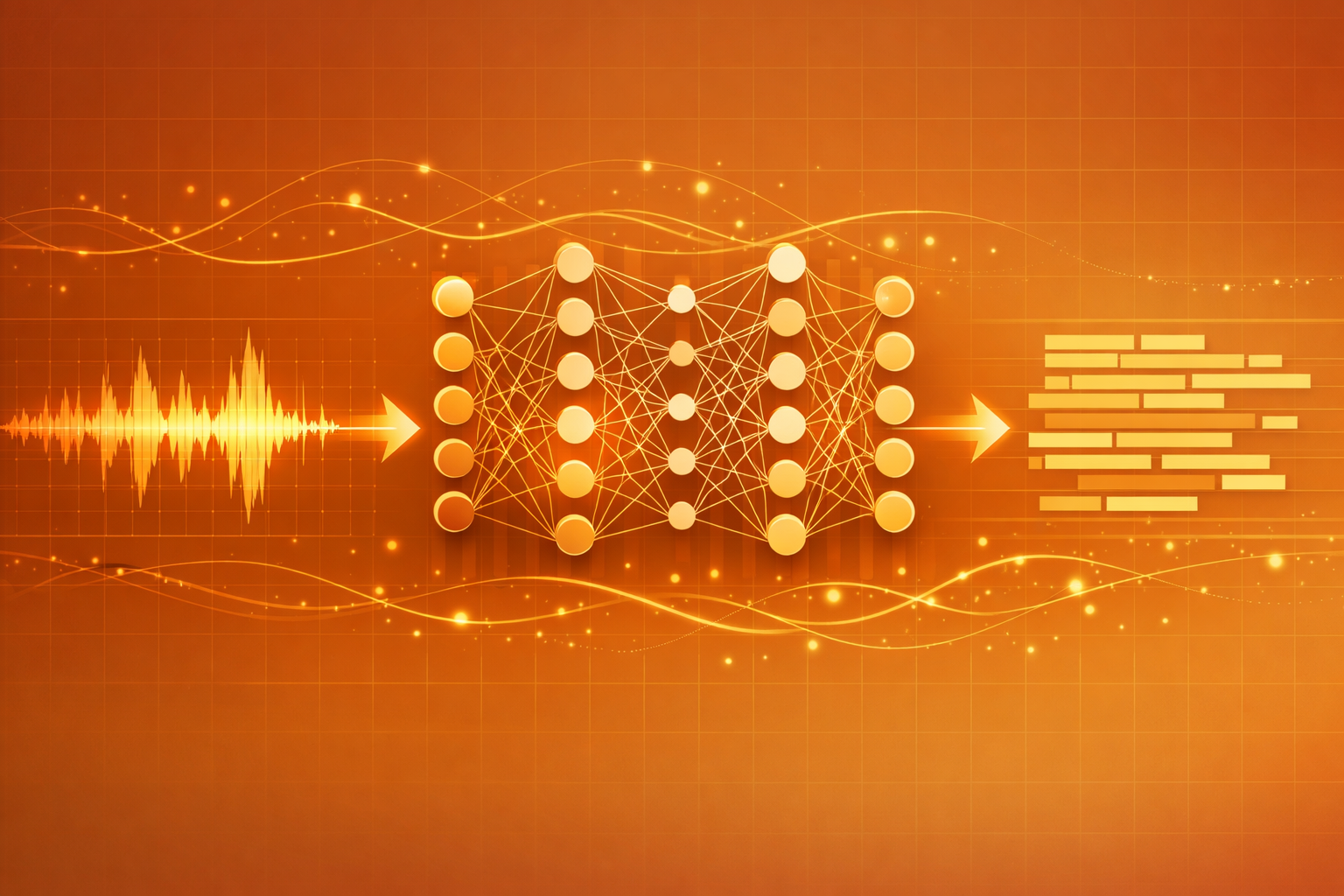
Whisper model architecture overview
Understanding the Contenders: A 2026 Overview
Before diving into the comparison, let's establish what each technology offers in the current landscape.
OpenAI's Whisper is an open-source, automatic speech recognition (ASR) system. Its major claim to fame is its robust performance across diverse accents, background noises, and technical jargon, trained on a massive, multilingual dataset. As of 2026, the core model remains free to use and self-host, with various third-party services and APIs built on top of it offering enhanced features.
Google Speech-to-Text is a cloud-based API service powered by Google's deep neural network algorithms. It's part of the Google Cloud Platform (GCP) suite and is continuously updated with Google's latest AI research. In 2026, it boasts deep integration with the broader Google ecosystem, real-time processing prowess, and specialized models for specific use cases like telephony or medical transcription.
Head-to-Head Comparison: Key Factors for 2026
Accuracy and Language Support
Accuracy is the holy grail of transcription, but it's nuanced. In 2026, both engines are exceptionally accurate under ideal conditions (clear audio, standard accent).
- Whisper excels in general-purpose transcription and handles challenging audio conditions remarkably well. Its multilingual capabilities are strong, allowing for transcription and translation in numerous languages. However, its performance can be more consistent than finely tuned for specific domains without customization.
- Google Speech-to-Text often holds a slight edge in domain-specific accuracy when using its enhanced models (e.g., for video, command-and-control, or phone call audio). Its automatic punctuation and capitalization are highly refined. For widely spoken languages with a strong Google presence, its accuracy is top-tier, though for some very low-resource languages, Whisper's open-source approach can sometimes be more adaptable.
2026 Verdict: For generic, high-variability audio, Whisper is incredibly reliable. For projects within common commercial domains or requiring deep Google ecosystem integration, Google Speech-to-Text's tailored models can provide a precision advantage.
Cost and Pricing Structure
The pricing models are fundamentally different and can be a deciding factor.
- Whisper: The model itself is free. The costs come from computational resources if you self-host it (GPU servers) or from the markup charged by platforms that offer it as a managed API. This can lead to very low costs for batch processing or high-volume users who manage their own infrastructure.
- Google Speech-to-Text: Operates on a pay-as-you-go cloud API model. You are charged per 15-second increment of audio processed. While there is a free tier, costs scale predictably with usage. Using advanced features like video or multi-channel models costs more. This model favors predictable budgeting and avoids infrastructure management.
2026 Verdict: Whisper can be more cost-effective for high-volume, batch-processing needs where you control the infrastructure. Google Speech-to-Text offers simplicity and predictable scaling for most business and individual users who prefer a managed service without upfront commitments.
Features and Customization
Beyond turning speech into text, what else can these tools do?
- Whisper: Its core strength is transcription and translation. The open-source nature allows for extensive customization; developers can fine-tune the model on specific datasets (e.g., legal, medical) to improve domain accuracy. Many third-party tools have built speaker diarization, editing interfaces, and export options around the Whisper engine.
- Google Speech-to-Text: Offers a suite of production-ready features out of the box: real-time streaming transcription, multi-channel recognition (for separate speaker tracks), profanity filtering, word-level confidence scores, and automatic language detection. Customization is available via Speech Adapt, allowing you to boost accuracy for specific words or phrases.
2026 Verdict: If you need cutting-edge, built-in features like real-time streaming and seamless Google Workspace integration, choose Google. If you require deep, technical customization or want to build a tailored application, Whisper's open-source foundation is powerful.
Speed and Latency
Processing speed is critical for live captioning or large backlogs.
- Whisper: Batch processing speed depends heavily on the hardware you run it on. With a powerful GPU, it's very fast. However, real-time streaming is not its native strength, though optimized derivatives have improved this significantly by 2026.
- Google Speech-to-Text: Engineered for low-latency performance, especially in its streaming API. It's the clear winner for live applications like video conference captioning, live broadcast subtitling, or real-time voice commands.
2026 Verdict: For real-time, low-latency applications, Google Speech-to-Text is the superior choice. For asynchronous processing of recorded files, both are fast, with Whisper's speed being a function of your investment in hardware.
Which Tool Should You Choose in 2026?
Your ideal choice depends entirely on your primary use case:
- Choose OpenAI's Whisper if you: Are a developer or tech-savvy user, need to customize or fine-tune the model, process large volumes of audio in batches cost-effectively, work with a wide variety of languages and accents, or prefer an open-source solution.
- Choose Google Speech-to-Text if you: Require reliable, real-time transcription (streaming), operate within the Google Cloud ecosystem, need production-ready features like multi-channel support without extra setup, work on domain-specific content that aligns with Google's enhanced models, or prefer a simple, managed API with predictable pricing.
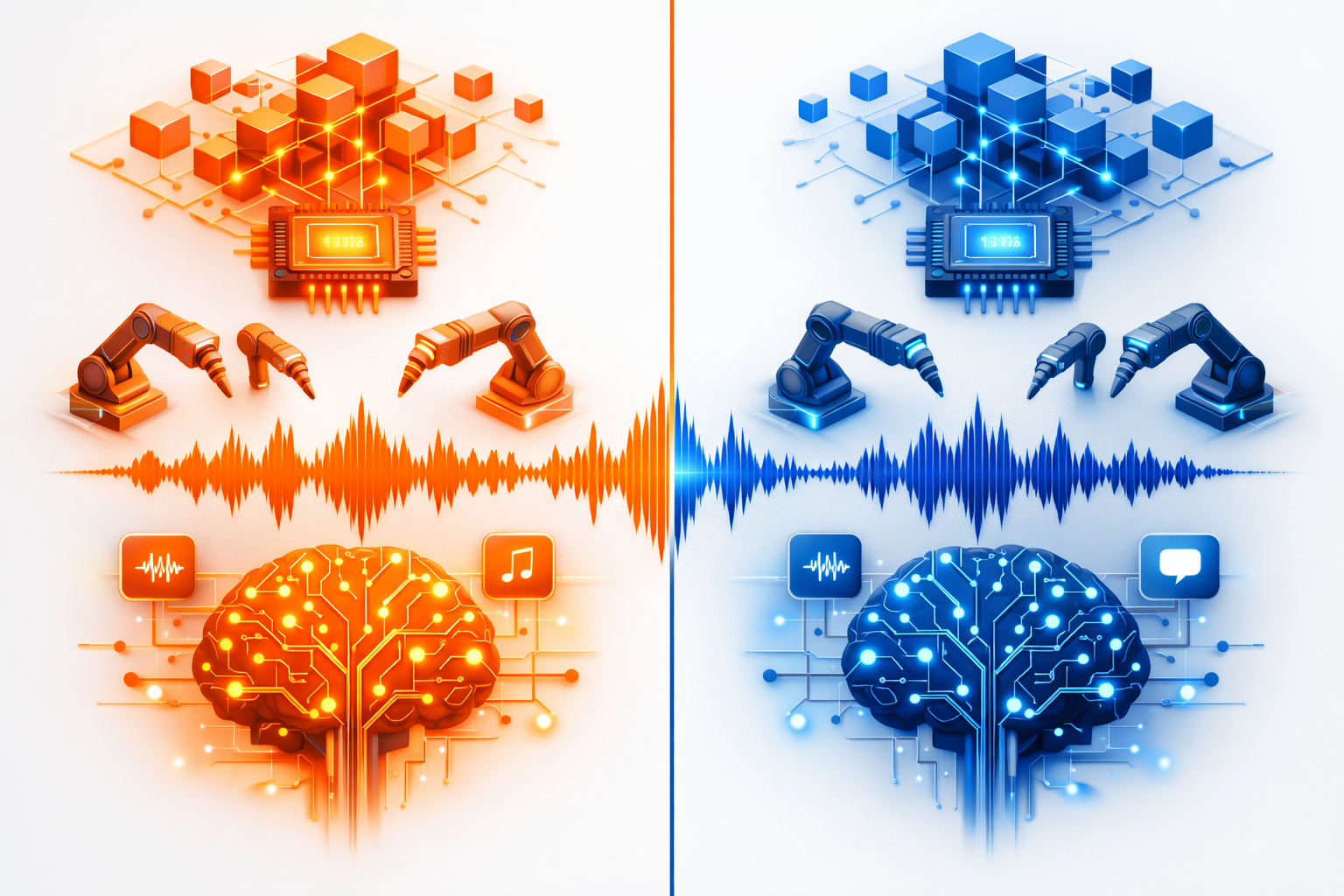
Accuracy comparison visualization
The Practical Alternative: Leveraging Both with AudioScribe
For many professionals and creators, the technical debate between self-hosting Whisper or managing a Google Cloud API can be a distraction from the core goal: getting accurate transcripts quickly and easily. This is where a service like AudioScribe shines.
AudioScribe utilizes the power of advanced AI models, including Whisper, to provide a user-friendly, web-based transcription service. It handles the infrastructure, optimization, and provides a clean interface for uploading audio, receiving accurate transcripts with punctuation and speaker identification, and easily editing or exporting the text. It’s a perfect example of how the raw power of models like Whisper can be packaged into a practical tool that saves time for students, journalists, podcasters, and researchers.
Frequently Asked Questions (FAQ)
Q1: Can I use Whisper for free in 2026? A: Yes, the core Whisper model remains open-source and free to download and run on your own hardware. However, using it via a third-party application or API (which handles the setup and infrastructure) usually involves a fee.
Q2: Is Google Speech-to-Text more accurate than Whisper? A: It's not a simple yes/no. For clear audio in common scenarios, both are highly accurate. Google may perform better in specific, optimized domains (like telephony or video). Whisper often demonstrates greater robustness in noisy environments or with diverse accents. The "best" choice depends on your specific audio content.
Q3: Which tool is better for transcribing long interviews or podcasts? A: For pre-recorded long-form content, both are excellent. Whisper, accessed through a cost-effective service, is a very popular choice for podcasters due to its balance of accuracy and cost. Google Speech-to-Text is equally capable, and its multi-channel feature is superb if your audio has separate tracks for each speaker.
Q4: Can these tools identify different speakers (speaker diarization)? A: Google Speech-to-Text has built-in speaker diarization (labeled as "Speaker 1," "Speaker 2," etc.) for certain models. The base Whisper model does not natively do this, but many applications and services that implement Whisper (like AudioScribe) add this feature on top, providing a complete transcription solution.
Q5: I'm not a developer. What's the easiest way to get started with transcription? A: Using a dedicated transcription service that leverages these AI engines is the simplest path. These platforms provide a straightforward upload interface, handle all the technical processing, and deliver an editable transcript. For instance, you can try AudioScribe for a user-friendly experience powered by state-of-the-art AI, without any setup required.
Choosing between Whisper and Google Speech-to-Text in 2026 is less about finding an absolute winner and more about matching a powerful technology to your specific needs, budget, and technical comfort. Whether you value the customizable, robust nature of Whisper or the feature-rich, integrated pipeline of Google, the good news is that transcription accuracy and accessibility have never been better.
Ready to experience effortless, accurate transcription powered by advanced AI? Skip the complexity and get started today.
Try AudioScribe free at AudioScribe