
Transcription vs Translation: Understanding the Key Differences and When to Use Each
Learn the crucial distinctions between transcription and translation, when to use each service, and how to choose the right tool for your audio and video content needs.
AudioScribe Editorial Team
Showing English content because this locale has no published version yet.
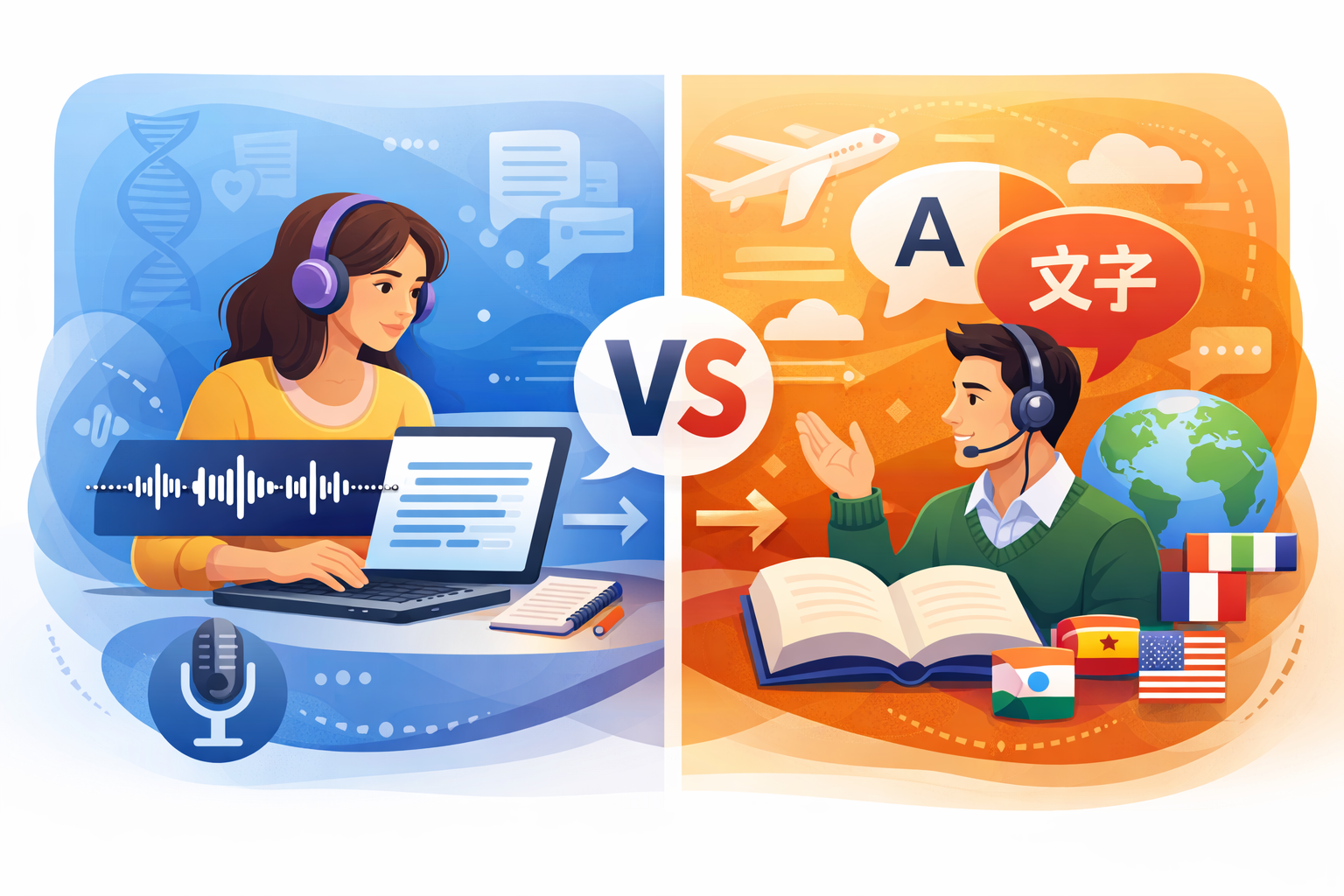
Clear Definitions with Side-by-Side Examples
Understanding transcription vs translation begins with concrete examples that illustrate their fundamental differences.
Transcription Example: Imagine you have a podcast episode in English where the host says: "Today we're discussing digital marketing trends for small businesses." Transcription converts this spoken English into written English text: "Today we're discussing digital marketing trends for small businesses."
Translation Example: Now consider you have a written English document that says: "Our company offers premium customer support services." Translation converts this English text into Spanish text: "Nuestra empresa ofrece servicios de atención al cliente premium."
Key Distinction: Transcription works with spoken content within the same language, while translation works with written content across different languages. This fundamental difference affects everything from the tools you use to the professionals you hire.
For those just starting with audio processing, our home upload page provides an easy way to begin exploring transcription services.
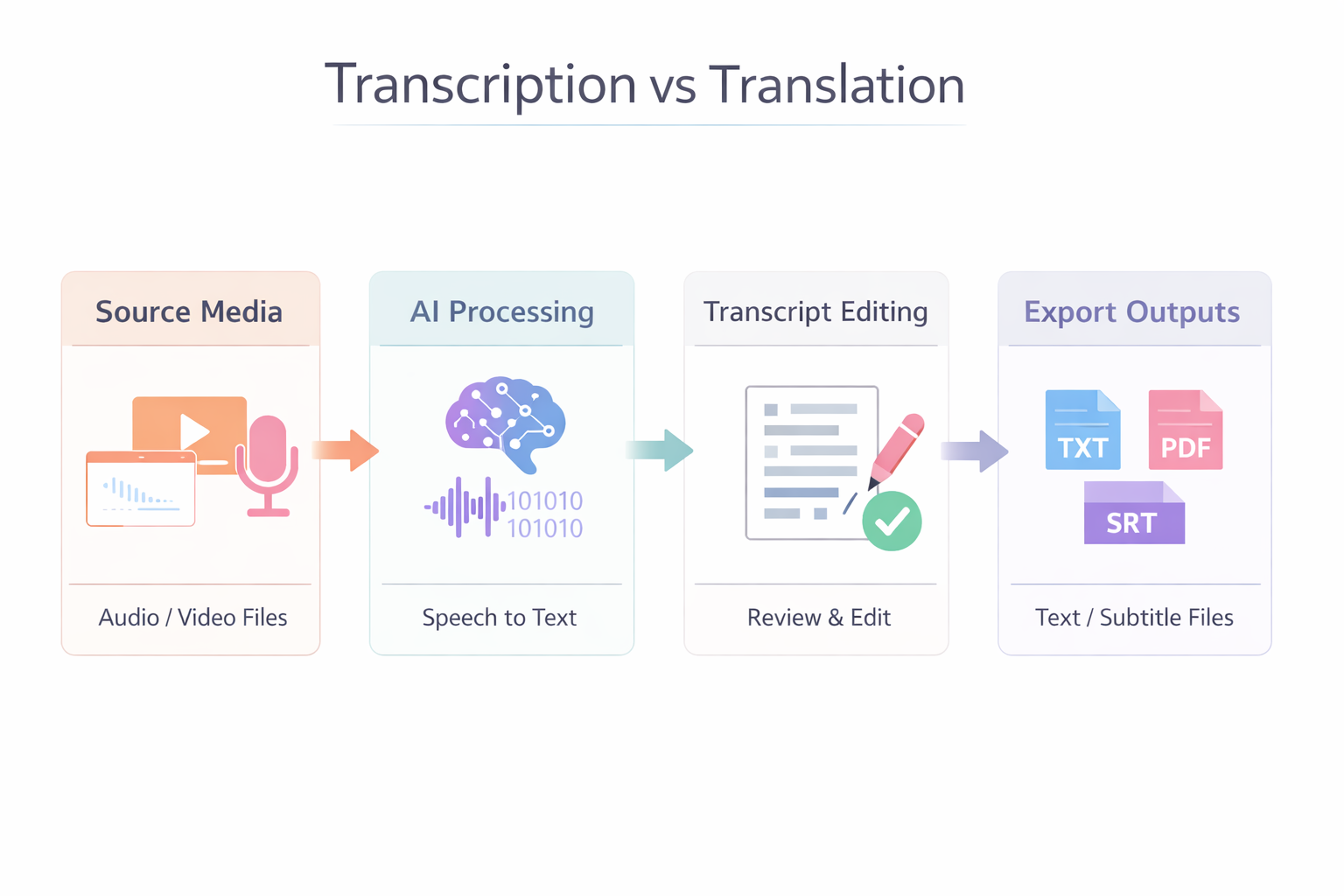
Visualizing the Transcription Process
When to Choose Which Service
Transcription Only
Perfect for creating subtitles, meeting minutes, interview records, or making audio content searchable and accessible.
Translation Only
Ideal for localizing documents, websites, or written materials for international audiences without original audio.
Both Services
Essential for multilingual podcasts, international conference recordings, or global training materials with audio sources.
Hybrid Approach
Useful for content that needs both transcription and selective translation of key sections for different markets.
Transcription vs Translation: Detailed Comparison
A comprehensive breakdown of how transcription and translation differ across key dimensions
| Aspect | Transcription | Translation | Combined Service | Best For |
|---|---|---|---|---|
Primary Input | Audio/Video files | Written text documents | Audio/Video files | Understanding source requirements |
Primary Output | Text in same language | Text in different language | Text in multiple languages | Planning final deliverables |
Skill Focus | Listening accuracy, typing speed | Language fluency, cultural nuance | Both skill sets | Hiring or tool selection |
Common Tools | Speech recognition software | Translation memory systems | Integrated platforms | Workflow efficiency |
Quality Factors | Audio clarity, speaker accents | Context understanding, idioms | End-to-end accuracy | Setting expectations |
Typical Cost | $1-3 per audio minute | $0.10-0.30 per word | $1.50-4 per audio minute | Budget planning |
The Translation Workflow
Cost Comparison Visualization
- Academic Research: Researchers typically need transcription for interview recordings and translation for foreign-language documents or literature reviews.
- Business Communications: Companies use transcription for meeting records and translation for international reports, contracts, and marketing materials.
- Media Production: Content creators require transcription for subtitles and translation for reaching global audiences with their videos or podcasts.
- Legal Proceedings: Legal professionals need accurate transcription of depositions and precise translation of international documents or evidence.
Common Mistake Alert
One of the most frequent errors in content processing is attempting to use translation tools on audio files directly. Translation software requires text input—you must first transcribe audio to text before translation can occur. This misunderstanding often leads to frustration and wasted resources.
Expert Insight
According to language processing specialists,
The most efficient approach for multilingual audio content is to first achieve high-quality transcription, then apply professional translation to the resulting text. This two-step process ensures accuracy at both stages.
This methodology prevents errors from compounding through the workflow.
Integrated Workflow Example
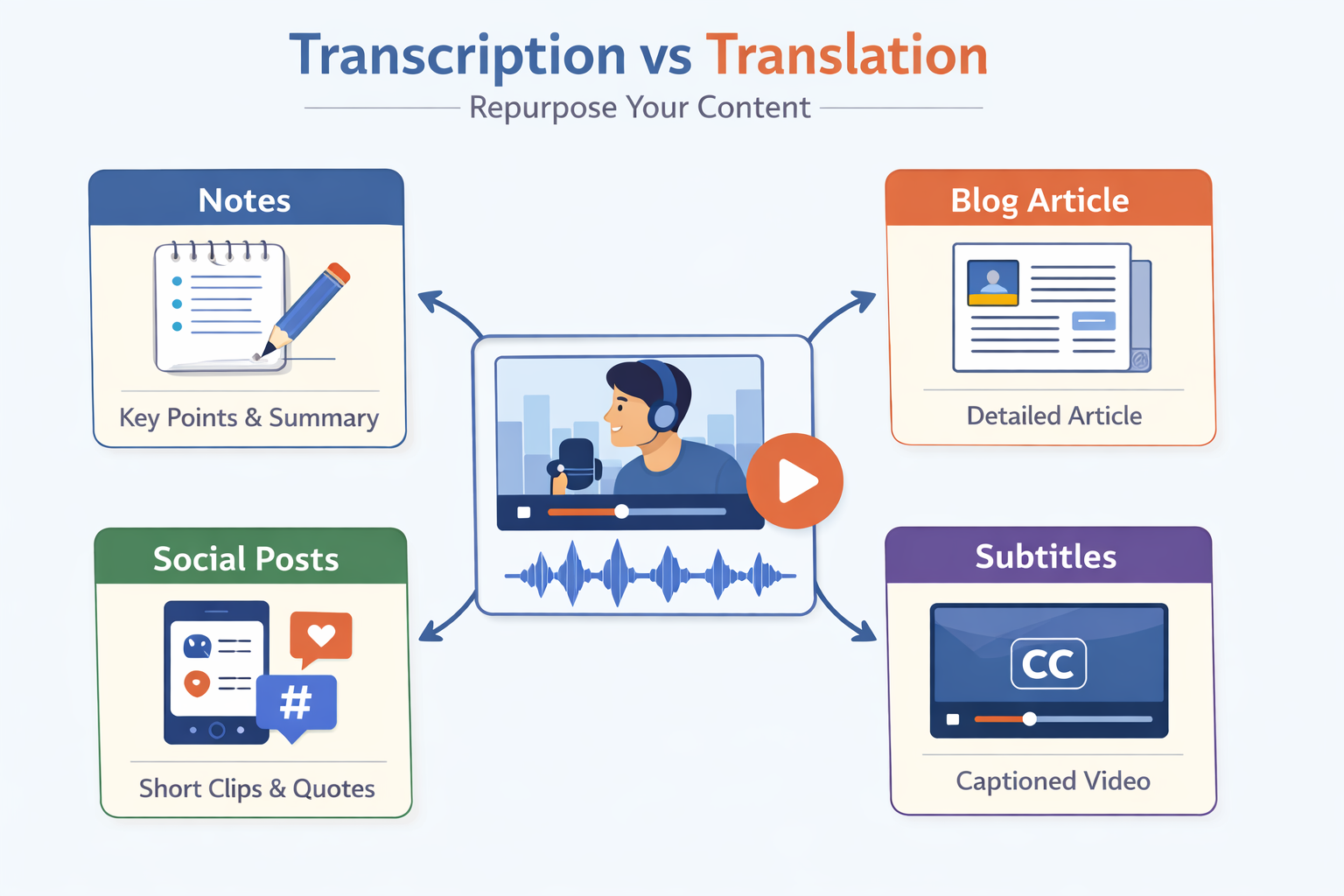
Tools That Handle Transcription, Translation, or Both
When considering transcription vs translation, your tool selection significantly impacts efficiency and quality. Different platforms specialize in various aspects of language processing.
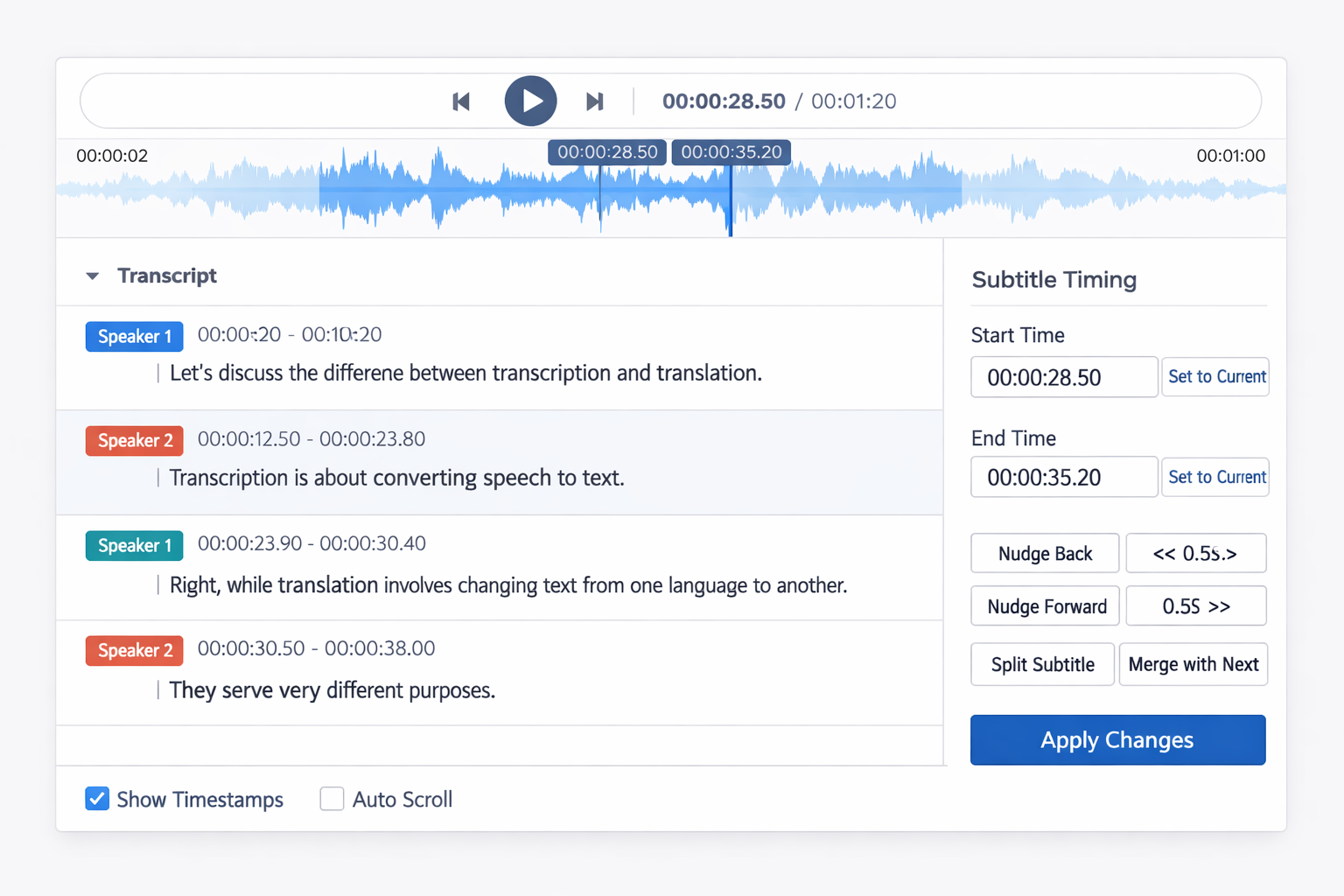
Transcription-Focused Tools: These platforms excel at converting speech to text with features like speaker identification, timestamping, and formatting options. They're ideal for podcasts, interviews, lectures, and meetings where you need accurate written records in the original language.
Translation-Focused Tools: These systems specialize in converting text between languages while preserving meaning, tone, and context. They often include terminology management, style guides, and quality assurance features for consistent results across documents.
Integrated Platforms: Some solutions offer both transcription and translation capabilities in a unified workflow. These are particularly valuable for content creators and businesses working with multilingual audio or video materials.
Explore our comprehensive tools page to discover solutions tailored to different aspects of the transcription vs translation decision process.
Frequently Asked Questions
How accurate are automated transcription and translation services? Modern automated services achieve impressive accuracy rates—typically 85-95% for transcription with clear audio, and increasingly reliable results for translation between common language pairs. However, for critical applications, human review remains essential.
Which languages are best supported? Major world languages like English, Spanish, Mandarin, French, and German have the most robust support across both transcription and translation tools. Niche languages or dialects may require specialized services.
What affects pricing for these services? Transcription costs typically depend on audio length, quality, and turnaround time. Translation pricing usually follows a per-word model influenced by language pair complexity and subject matter expertise.
Can I combine transcription and translation workflows? Absolutely. Many successful projects use a sequential approach: first transcribing audio to text, then translating the resulting document. Some platforms even automate this pipeline for efficiency.
How do I choose between human and automated services? Consider your accuracy requirements, budget, and timeline. Automated services offer speed and cost savings, while human services provide nuance and quality assurance for sensitive or complex content.
Making the Right Choice for Your Needs
Navigating the transcription vs translation landscape requires understanding your specific requirements. Start by asking these key questions:
- What is my source material? (Audio/video or written text?)
- What languages are involved in the source and target?
- How will the final output be used?
- What are my accuracy requirements?
- What is my budget and timeline?
For audio-based projects needing text conversion, begin with our audio-to-text service to establish a solid foundation. Remember that many projects benefit from a hybrid approach—using automated tools for initial processing and human experts for refinement.
Whether you're creating accessible content, expanding to international markets, or documenting important conversations, understanding transcription vs translation empowers you to make informed decisions. The right approach saves time, reduces costs, and ensures your message reaches its intended audience effectively.
Ready to put this knowledge into practice? Start with transcription for your audio files or explore translation options for your existing documents. Our platform makes both processes straightforward and efficient.